Guide
Collection-Only Furniture Delivery Made Simple
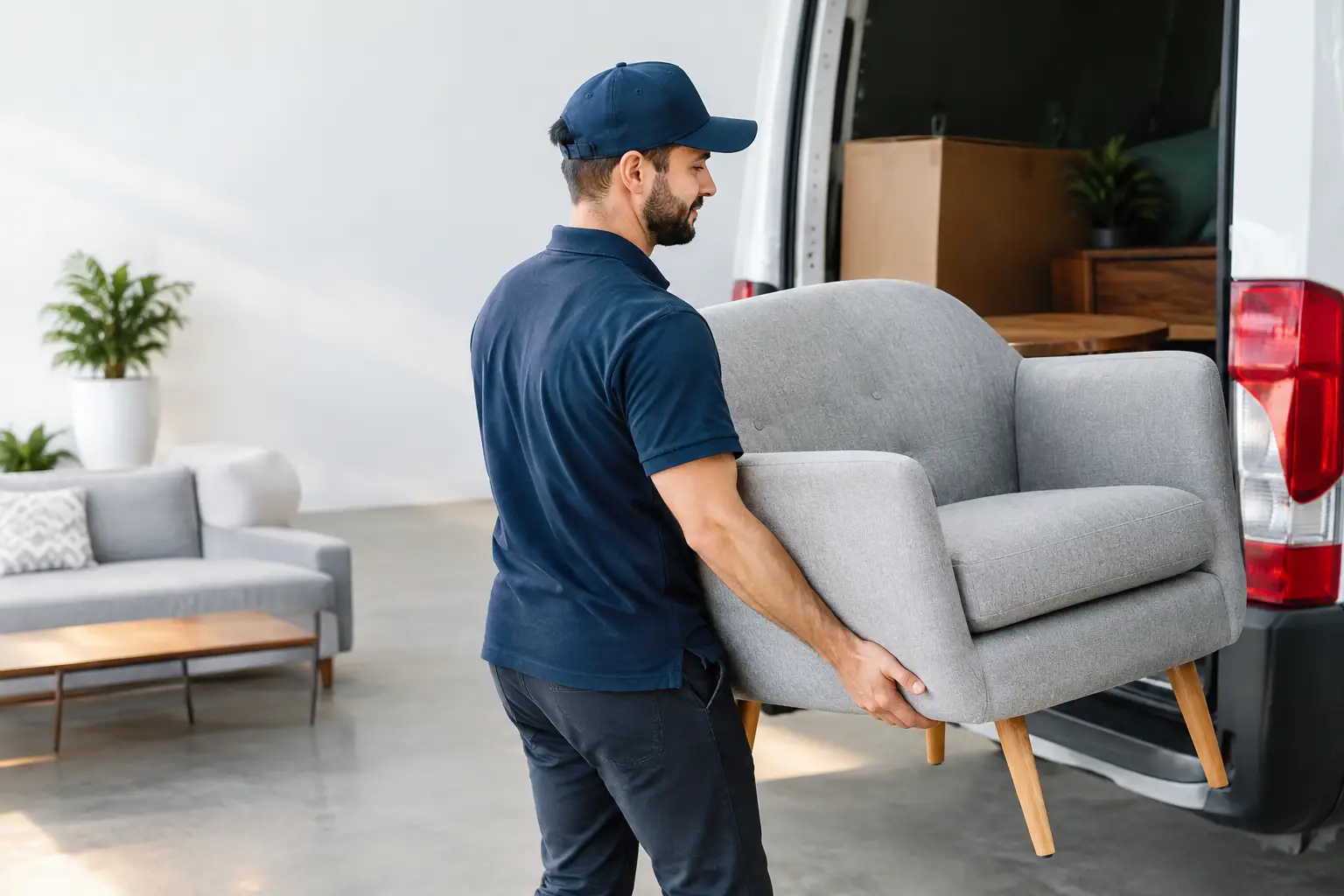
You have found the sofa. It is the right size, the right colour and far better value than anything on the high street. Then the listing delivers the familiar sting: collection only. Collection-only furniture delivery is the practical step that turns a great marketplace, charity-shop or clearance find into something you can actually enjoy at home.
For most people, the problem is not buying the item. It is fitting a three-seater sofa into a hatchback, borrowing a van at short notice, persuading friends to help, and hoping the seller is still available when you arrive. A specialist bulky-item delivery service removes that tangle. You enter the collection and delivery postcodes, add the item and access details, see a clear price and available dates, then book.
What collection-only really means
A collection-only listing means the seller will not arrange transport. It does not mean the item has to stay out of reach if you do not own a van. It simply means that getting it from their address to yours is your responsibility.
That responsibility can feel bigger than it sounds. A wardrobe may need collecting from a first-floor flat. A washing machine may be waiting in a garage. An auction-house lot may have a strict release window. Even a small dining table can become awkward when it is wrapped, heavy and several towns away.
This is where collection-only furniture delivery earns its place. Rather than treating your purchase like a full house move or an ordinary parcel, it is planned as a one-to-three-piece bulky collection. The job is about the route, the item dimensions, the collection point and the access at both ends.
The easy way to get a bulky find home
The best time to arrange delivery is before you commit to the purchase. Ask the seller for the collection postcode, confirm what the item is, and check whether it is on the ground floor. You can then get a price and delivery date before paying or agreeing collection.
With OctoFetch, the booking journey is deliberately straightforward. Enter the two postcodes, tell us what you have bought and share useful details such as measurements, stairs, parking restrictions or whether the item can be dismantled. You will see a fixed price and dates based on covered scheduled routes, rather than waiting for couriers to bid on the job.
That distinction matters. Courier bidding can look flexible, but it often leaves you comparing unknown providers, chasing replies and trying to work out whether the final cost will change. Scheduled-route delivery is built for customers who want a clear answer: can you collect it, when can you deliver it, and what will it cost?
Once booked, collection and delivery are managed with tracking and support by phone, WhatsApp or email. You are not left trying to coordinate a private seller, a hired van and a driver you have never spoken to.
Why a specialist service beats van hire for many purchases
Hiring a van can make sense if you are collecting several items locally, have a confident driver, and have people ready to help load and unload. It can be a good option for a planned day of furnishing a flat.
For one bulky purchase, it is often less simple than it first appears. There is the rental cost, fuel, deposit, insurance excess, collection time and return deadline. You still need to inspect the item, secure it safely, handle the lifting and deal with any parking or congestion charges. If the seller is two counties away, the bargain can quickly stop looking like one.
A full removals company sits at the other end of the scale. They are ideal for moving the contents of a home, but may be more service than you need for a single bed frame, treadmill or sideboard. Collection-only deliveries occupy the useful middle ground: professional transport for a specific awkward item, without paying for an entire moving crew.
Access details are not small details
The quickest way to avoid delivery-day surprises is to be precise about access. Tell the delivery provider if there are stairs, a narrow hallway, a steep drive, limited parking, a gated building or a long walk from the road. Do the same for the collection address where possible.
Measurements matter too. Check the item’s height, width and depth against doorways, turns on the stairs and lift dimensions. A seller may describe a wardrobe as "standard", but standard does not tell you whether it will pass through a Victorian terrace doorway or fit in a lift.
Ground-floor in-home collection and delivery is particularly useful for items that are too heavy or awkward to leave on the kerb. It means your purchase can be collected from inside at ground level and brought into your home at ground level, rather than relying on pavement handovers. If stairs, upper floors or difficult access are involved, say so when booking. The right plan depends on the item, the route and the help required.
A few checks before you press buy
Before arranging transport, confirm the item is genuinely ready to go. Ask whether it is assembled, whether detachable legs or cushions are included, and whether it has any damage that affects handling. For appliances, check whether they have been disconnected and drained. For a sofa or mattress, make sure you are happy with its condition and dimensions before committing.
It also helps to agree a realistic collection window with the seller. Private sellers may only be available after work, while shops, reuse centres and auction houses can have set opening or release times. Give accurate information at booking rather than assuming any time will work. That allows the collection to be planned properly around the route.
Keep communication simple. Let the seller know that a delivery service will collect on your behalf, share any reference number they need, and make sure they know the item has been paid for. If the seller expects cash on collection, sort that arrangement before the driver arrives. A transport provider moves the item; it is not the product merchant and cannot inspect, negotiate or pay for the purchase for you.
Furniture is not the only collection-only challenge
The same issue appears with plenty of bulky buys. A charity-shop chest of drawers, a clearance fridge freezer, a vintage bicycle, a home-gym bench, a television unit or car parts can all be hard to collect without the right vehicle. The item may be inexpensive, but its shape, weight or distance makes ordinary parcel delivery unsuitable.
That is also why accurate item information matters. A compact armchair and a recliner may look similar in a photograph but require different space in a vehicle. A dismantled bed is very different from a fully assembled ottoman bed. Clear details give you a more dependable quote and help avoid delays on collection day.
Buy the find, not the transport problem
Collection-only should not force you to scroll past furniture you genuinely want. It should prompt a quick practical check: where is it, how big is it, what is access like, and when can it travel? Once those answers are in place, the logistics become a booked task rather than a weekend project.
So when the next perfect sofa, wardrobe or dining set appears with those two frustrating words, do not start looking for a borrowed van. Get the postcodes and item details, check the available date and let’s get it home.